1. Introduction
Rapid industrialization, development of agriculture and urban expansion have significantly increased environmental contamination worldwide, particularly in developing countries such as Ethiopia, where industrial sectors including chemical industries, textiles, tanneries, cement manufacturing, pharmaceuticals, and agro-processing industries are expanding rapidly
| [1] | F. T. Geldasa, M. A. Kebede, M. W. Shura, and F. G. Hone, “Experimental and computational study of metal oxide nanoparticles for the photocatalytic degradation of organic pollutants: a review,” RSC Adv., vol. 13, no. 27, pp. 18404–18442, 2023, https://doi.org/10.1039/d3ra01505j |
[1]
. They are among the largest consumers of energy worldwide, accounting for a significant share of global electricity and fuel consumption. The growing demand of energy to run these industries again remain major challenges faced by global industrial sectors creating challenges like energy security, environmental protection, and climate change
| [2] | M. A. Ahmed, S. A. Mahmoud, and A. A. Mohamed, “Interfacially engineered metal oxide nanocomposites for enhanced photocatalytic degradation of pollutants and energy applications,” RSC Adv., vol. 15, no. 20, pp. 15561–15603, 2025, https://doi.org/10.1039/d4ra08780a |
[2]
. To address these challenges, industries shall adopt green strategies such as renewable energy utilization, energy-efficient technologies, waste reduction, recycling, and low-carbon manufacturing processes. Although these industries contribute substantially to economic growth and employment opportunities, they simultaneously generate large quantities of hazardous pollutants such as dyes, heavy metals, organic contaminants, toxic sludge, and greenhouse gases
| [3] | E. M. Sorecha, “Environment Pollution and Climate Change,” Environ. Pollut. Clim. Clim. Chang., vol. 1, no. 2, pp. 1–6, 2017. |
[3]
. Conventional wastewater treatment technologies often fail to completely remove these contaminants because of high operational costs, poor degradation efficiency, and secondary pollution generation. Consequently, researchers have increasingly focused on photocatalytic nanomaterials as environmentally friendly and energy-efficient alternatives for industrial wastewater treatment and renewable energy applications
| [4] | S. Stankic, S. Suman, F. Haque, and J. Vidic, “Pure and multi metal oxide nanoparticles: Synthesis, antibacterial and cytotoxic properties,” J. Nanobiotechnology, vol. 14, no. 1, pp. 1–20, 2016, https://doi.org/10.1186/s12951-016-0225-6 |
[4]
.
Textile factories generate large quantities of colored wastewater containing dyes, surfactants, bleaching agents, suspended solids, and toxic organic compounds
| [5] | S. Khan, T. Noor, N. Iqbal, and L. Yaqoob, “Photocatalytic Dye Degradation from Textile Wastewater: A Review,” ACS Omega, vol. 9, no. 20, pp. 21751–21767, 2024,
https://doi.org/10.1021/acsomega.4c00887 |
[5]
. Photo catalytic nanomaterial such as TiO₂, ZnO, and g-C₃N₄ offer effective alternatives for treating textile wastewater because they can generate highly reactive hydroxyl radicals capable of mineralizing organic pollutants into carbon dioxide and water
| [6] | M. R. Al-Mamun, S. Kader, M. S. Islam, and M. Z. H. Khan, “Photocatalytic activity improvement and application of UV-TiO2 photocatalysis in textile wastewater treatment: A review,” J. Environ. Chem. Eng., vol. 7, no. 5, 2019,
https://doi.org/10.1016/j.jece.2019.103248 |
[6]
. The leather and tannery industry is another critical sector where photo-catalytic nano-materials could provide substantial environmental benefits
| [7] | M. N. Chong, Y. J. Cho, P. E. Poh, and B. Jin, “Evaluation of Titanium dioxide photocatalytic technology for the treatment of reactive Black 5 dye in synthetic and real greywater effluents,” J. Clean. Prod., vol. 89, pp. 196–202, 2015,
https://doi.org/10.1016/j.jclepro.2014.11.014 |
[7]
. Ethiopia possesses one of Africa’s largest leather industries because of its abundant livestock resources. However, tannery industries release wastewater containing chromium compounds, sulfides, dyes, organic matter, and suspended solids
| [2] | M. A. Ahmed, S. A. Mahmoud, and A. A. Mohamed, “Interfacially engineered metal oxide nanocomposites for enhanced photocatalytic degradation of pollutants and energy applications,” RSC Adv., vol. 15, no. 20, pp. 15561–15603, 2025, https://doi.org/10.1039/d4ra08780a |
[2]
. Hexavalent chromium [Cr(VI)] is particularly hazardous because of its carcinogenic and toxic nature. Photo-catalytic Nano-materials such as Fe₃O₄/TiO₂ composites, ZnO nanostructures, and magnetic photocatalysts can facilitate the reduction of Cr(VI) into less toxic Cr(III) while simultaneously degrading organic pollutants.
The cement industry also presents important opportunities for photo-catalytic nanomaterial applications. Cement production is one of the major contributors to carbon dioxide emissions worldwide, including in Ethiopia. Cement emit significant quantities of CO₂, particulate matter, and nitrogen oxides during clinker production and fuel combustion processes. Photocatalytic nanomaterials can contribute to cleaner cement technologies through several approaches. TiO₂-coated cement surfaces possess self-cleaning and air-purification properties because they can degrade atmospheric pollutants such as NOx, volatile organic compounds (VOCs), and airborne organic contaminants under sunlight irradiation
. In addition, photocatalytic CO₂ reduction technologies are increasingly investigated for converting carbon dioxide into useful fuels such as methanol and methane using solar energy
. Although such systems are still largely at research and pilot scales, future integration into cement industries may contribute to carbon emission mitigation and sustainable industrial production in Ethiopia. Furthermore, photocatalytic coatings on building materials may help reduce urban air pollution and improve infrastructure durability in rapidly growing Ethiopian cities.
Pharmaceutical and chemical industries are also increasingly recognized as important targets for photocatalytic wastewater treatment systems. Pharmaceutical wastewater often contains antibiotics, endocrine-disrupting chemicals, solvents, and biologically active compounds that are difficult to remove through conventional biological treatment methods
| [10] | M. Patel, R. Kumar, K. Kishor, T. Mlsna, C. U. Pittman, and D. Mohan, “Pharmaceuticals of emerging concern in aquatic systems: Chemistry, occurrence, effects, and removal methods,” Chem. Rev., vol. 119, no. 6, pp. 3510–3673, 2019,
https://doi.org/10.1021/acs.chemrev.8b00299 |
[10]
. Photocatalytic advanced oxidation processes provide efficient degradation pathways for these persistent pollutants. As Ethiopia continues expanding pharmaceutical manufacturing capacity, advanced photocatalytic technologies may become essential for sustainable wastewater management and pollution prevention. Semiconductor nanomaterial such as TiO₂, ZnO, and hetero-junction photocatalysts can effectively degrade pharmaceutical residues under ultraviolet or visible-light irradiation
| [11] | N. N. Roslan et al., “Recent Advances in Advanced Oxidation Processes for Degrading Pharmaceuticals in Wastewater—A Review,” Catalysts, vol. 14, no. 3, pp. 1–25, 2024,
https://doi.org/10.3390/catal14030189 |
[11]
.
In the future, Ethiopian chemical industries may also utilize photocatalytic systems for green chemical synthesis, catalytic oxidation reactions, and solar-driven production of valuable chemicals under mild operating conditions
| [2] | M. A. Ahmed, S. A. Mahmoud, and A. A. Mohamed, “Interfacially engineered metal oxide nanocomposites for enhanced photocatalytic degradation of pollutants and energy applications,” RSC Adv., vol. 15, no. 20, pp. 15561–15603, 2025, https://doi.org/10.1039/d4ra08780a |
[2]
. The photo-catalytic field revolves around the utilization of photon energy to initiate various chemical reactions using non-adsorbing substrates, through processes such as single electron transfer, energy transfer, or atom transfer
| [12] | F. Mohamadpour and A. M. Amani, “Photocatalytic systems: reactions, mechanism, and applications,” RSC Adv., vol. 14, no. 29, pp. 20609–20645, 2024, https://doi.org/10.1039/d4ra03259d |
[12]
. They emerged as promising catalysts for sustainable chemical industries due to their ability to utilize solar energy for chemical transformations under environmentally benign conditions. Recent studies demonstrate their potential in green chemical synthesis, selective oxidation and reduction reactions, biomass valorization, CO₂ conversion, and renewable fuel production
. In particular, photo-catalytic systems facilitate the production of high-value chemicals and pharmaceutical intermediates while reducing energy consumption and hazardous waste generation
| [14] | A. A. Nassar, A. A. E. A. Elfiky, A. K. El-Sawaf, and M. F. Mubarak, “Sustainable green synthesis and characterization of nanocomposites for synergistic photocatalytic degradation of Reactive Orange 16 in textile wastewater using CuO@A-TiO2/Ro-TiO2,” Sci. Rep., vol. 14, no. 1, pp. 1–12, 2024,
https://doi.org/10.1038/s41598-024-63294-3 |
[14]
. Furthermore, advanced photo-catalytic Nano-materials enable the conversion of biomass-derived feed stocks into renewable chemicals and fuels, supporting the transition toward a circular and low-carbon chemical industry.
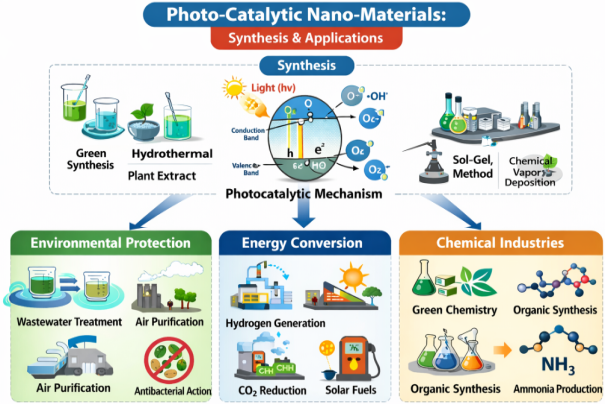
Figure 1. General representation of photo-catalytic Nano-material synthesis and their application areas.
Photo-catalytic Nano-materials have emerged as one of the most promising advanced technologies for addressing environmental pollution, proving renewable energy generation, and sustainable chemical production
| [15] | A. Sewnet, E. Alemayehu, M. Abebe, D. Mani, S. Thomas, and B. Lennartz, “Hydrothermal Synthesis of Heterostructured g-C3N4/Ag–TiO2 Nanocomposites for Enhanced Photocatalytic Degradation of Organic Pollutants,” Materials (Basel)., vol. 16, no. 15, 2023, https://doi.org/10.3390/ma16155497 |
[15]
. Nano-materials, particularly those with metallic or semiconducting properties responsive to UV-Vis radiation, have gained popularity due to their unique characteristics compared to larger materials
| [16] | “Fotoaktywne nanomateriały w zastosowaniach środowiskowych Photoactive nanomaterials in environmental application,” pp. 33–45, 2021. |
[16]
. Finding efficient and stable photo-catalysts is crucial, requiring characteristics like broad light absorption, suitable energy band positions, long charge carrier diffusion paths, and stability
. Achieving these qualities in semiconductors is challenging, leading to research on enhancing photo processes through electron structure, surface morphology, and crystal structure modifications. Recent literature explores the synthesis and application of Nano-materials in photo-catalysis
| [18] | B. Ohtani, “Journal of Photochemistry and Photobiology C : Photochemistry Reviews Photocatalysis A to Z — What we know and what we do not know in a scientific sense,” "Journal Photochem. Photobiol. C Photochem. Rev., vol. 11, no. 4, pp. 157–178, 2011, https://doi.org/10.1016/j.jphotochemrev.2011.02.001 |
[18]
. Ideal photo catalysts should possess qualities such as broad light absorption, appropriate energy band positioning, high charge carrier mobility, and stability. Achieving efficient photo processes involves preventing electron-hole pair recombination and facilitating their transport to the semiconductor surface
| [18] | B. Ohtani, “Journal of Photochemistry and Photobiology C : Photochemistry Reviews Photocatalysis A to Z — What we know and what we do not know in a scientific sense,” "Journal Photochem. Photobiol. C Photochem. Rev., vol. 11, no. 4, pp. 157–178, 2011, https://doi.org/10.1016/j.jphotochemrev.2011.02.001 |
[18]
. Enhancing semiconductor efficiency involves modifying electron structure, surface morphology, and crystal structure, as well as broadening radiation absorption through methods like doping and introducing metal nanoparticles
| [19] | H. T. Berede et al., “Photocatalytic activity of the biogenic mediated green synthesized CuO nanoparticles confined into MgAl LDH matrix,” Sci. Rep., vol. 14, no. 1, pp. 1–13, 2024,
https://doi.org/10.1038/s41598-024-52547-w |
[19]
. Improving crystallinity and reducing particle size can also minimize recombination centers and enhance charge carrier diffusion which makes it more sustainable for this environmental remediation issues. Tailoring Nano-crystal shapes can enhance selectivity in photo-catalytic processes by enabling selective particle adsorption. The unique properties of Nano-materials, such as high surface area, quantum size effects, and tuneable electronic properties, make them particularly effective as photo-catalysts
.
Researchers are focusing on factors like band gap, charge carrier behavior, and adsorptive to enhance the performance of these materials. Optimizing band structures and charge separation is crucial for improving hot-carrier generation in photo-catalysts. However, challenges such as low surface area, limited active sites, charge carrier recombination, and optical absorption need to be addressed for commercial applications. On-going research is exploring various aspects of photo-catalytic Nano-materials and their challenges for practical use
. In nowadays, on other hand research has been devoted to reducing CO
2 emissions by converting solar energy into chemical energy. Lately, there has been a focus on developing cost-effective technologies to reduce CO
2 emissions by harnessing solar energy for chemical energy conversion
| [15] | A. Sewnet, E. Alemayehu, M. Abebe, D. Mani, S. Thomas, and B. Lennartz, “Hydrothermal Synthesis of Heterostructured g-C3N4/Ag–TiO2 Nanocomposites for Enhanced Photocatalytic Degradation of Organic Pollutants,” Materials (Basel)., vol. 16, no. 15, 2023, https://doi.org/10.3390/ma16155497 |
[15]
. Photo-catalysis has emerged as a promising solution, capable of addressing energy and environmental challenges by utilizing solar energy for various applications such as pollutant degradation, water disinfection, hydrogen production, carbon dioxide reduction, sensing, and therapy
. As we can understand from
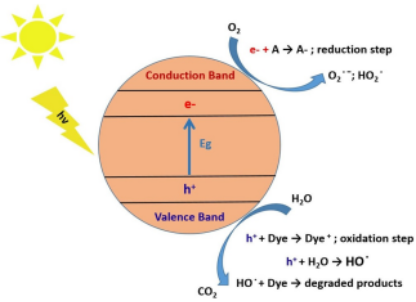
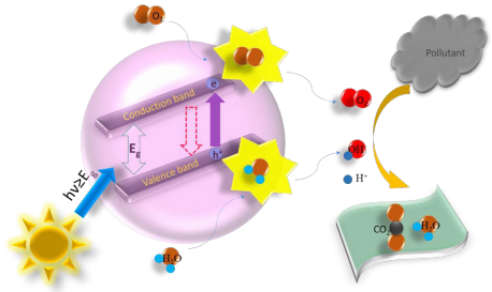
Figure 2 the general illustration of semiconductor photo-catalysis process, when a photon is absorbed by the semiconductor, it excites an electron from the valence band to the conduction band, generating a positively charged hole in the valence band. These electron-hole pairs can move to the semiconductor's surface and engage in redox reactions to either degrade or reduce the molecules that are adsorbed.
H2O + h+(valance band)→HO-+ H+(2)
h+ (valance band) + pollutant→Pollutant+(3)
HO-+ Pollutant→H2O + CO2(4)
Photo-catalytic materials based on metal oxide Nano-materials like TiO
2, ZnO, CeO, CuO, SnO
2, Bi
2O
3, WO
3, Al
2O
3, NiO, iron-based oxides, among others are leading the way in environmental remediation, particularly in breaking down organic pollutants in wastewater
| [23] | T. G. Gindose et al., “Novel polyvinyl alcohol-assisted MnO2-ZnO-CuO nanocomposites as an efficient photocatalyst for methylene blue degradation from wastewater,” RSC Adv., vol. 14, no. 52, pp. 38459–38469, 2024,
https://doi.org/10.1039/d4ra06476c |
[23]
. Hybrid Nano-materials combining semiconductor nanoparticles with materials like carbon Nano-tubes, graphene, or metal nanoparticles show improved photo-catalytic performance and versatility
. To the specific, semiconductor quantum dots such as CdS and CdSe offer tuneable bandgaps and high quantum yields, making them promising for solar energy conversion and photo catalysis
. Nano-materials, due to their high reactivity and surface-to-volume ratio, are more effective in environmental remediation compared to conventional methods
| [26] | A. Negash, L. M. Derseh, A. Tedla, and J. M. Yassin, “Eco-friendly synthesis of CuO/Bi2O3 nanocomposite for efficient photocatalytic degradation of rhodamine B dye,” Sci. Rep., vol. 14, no. 1, pp. 1–15, 2024, https://doi.org/10.1038/s41598-024-74408-2 |
[26]
. Metal oxide nanoparticles are particularly studied for photo-catalysis as their properties change significantly at the Nano-scale. Nano-materials exhibit superior photo-catalytic performance compared to bulk materials
| [27] | M. Ilyas, W. Ahmad, and H. Khan, “Utilization of activated carbon derived from waste plastic for decontamination of polycyclic aromatic hydrocarbons laden wastewater,” Water Sci. Technol., vol. 84, no. 3, pp. 609–631, 2021,
https://doi.org/10.2166/wst.2021.252 |
[27]
.
Photocatalytic nanomaterials are increasingly being utilized in various industries because of their ability to degrade pollutants, purify water and air, generate renewable energy, and support environmentally friendly chemical reactions. In Ethiopia, the application of photocatalytic nanomaterials is still emerging; however, several industrial sectors possess strong potential for adopting these technologies due to increasing environmental pollution, stricter environmental regulations, and growing interest in sustainable industrial development. This review article mainly focus on the recently developed photo catalytic metal oxide Nano-materials, synthesis method and their outstanding performance applications in the areas of environmental remediation, energy conversion and its catalytic activity in chemical industries.
2. Methodology
2.1. Synthesis of Metal Oxide-Based Nano-materials
The synthesis of photo catalytic Nano-materials involves various techniques aimed at producing materials with high surface area, controlled morphology, and enhanced photo catalytic and properties properties.
2.1.1. The Co-precipitation Method
The co-precipitation method is a technique used to prepare metal oxide photo catalysts at ambient temperature. It involves using a precipitating medium and a metal salt precursor to form oxo-hydroxides in water
| [1] | F. T. Geldasa, M. A. Kebede, M. W. Shura, and F. G. Hone, “Experimental and computational study of metal oxide nanoparticles for the photocatalytic degradation of organic pollutants: a review,” RSC Adv., vol. 13, no. 27, pp. 18404–18442, 2023, https://doi.org/10.1039/d3ra01505j |
[1]
. The commonly used precipitating media in these methods are NaOH, KOH, and (C
2H
5)
4NOH, by which it has been established that the morphologies and properties of the metal oxides are highly influenced by the pH of the nature of the alkaline solution. The choice of base and pH level influences the properties of the metal oxides
| [19] | H. T. Berede et al., “Photocatalytic activity of the biogenic mediated green synthesized CuO nanoparticles confined into MgAl LDH matrix,” Sci. Rep., vol. 14, no. 1, pp. 1–13, 2024,
https://doi.org/10.1038/s41598-024-52547-w |
[19]
.
2.1.2. Micro-emulsion Technique
Microemulsions can be described as a thermodynamically stable system of two immiscible liquids. The dispersed phase, which is present at a lower volume, forms the droplets in a microemulsion
. These systems depend on the nature of the dispersed liquid so that dispersion liquids may be classified as either oil in water (O/W), where oil droplets exist dispersed in bulk water, or conversely, water in oil (W/O), where water droplets are dispersed in oil. Stankic et al. introduced the micro-emulsion technique involving two incompatible liquids, oil and water, separated by surfactants. By mixing precise amounts of these components and a metal oxide precursor through continuous stirring, a homogenized phase is achieved
| [29] | O. Álvarez-Bermúdez, I. Adam-Cervera, K. Landfester, and R. Muñoz-Espí, “Morphology Control of Polymer–Inorganic Hybrid Nanomaterials Prepared in Miniemulsion: From Solid Particles to Capsules,” Polymers (Basel)., vol. 16, no. 21, pp. 1–36, 2024, https://doi.org/10.3390/polym16212997 |
[29]
. Nanoparticles are formed by adding precipitating agents and centrifuging the mixture. The resulting nanoparticles are then washed and dried. Micro-emulsions serve as Nano-reactors for Nano-particle creation, with the advantage of controlling size and shape
| [30] | W. H. and M. R. M. Mohammad Soleimani Zohr Shiri, “Microemulsion-Based Synthesis Methodologies Used for Preparing Nanoparticle Systems of The Noble,” Materials (Basel)., vol. 12, pp. 1–8, 2019. |
[30]
. However, the method requires multiple washing steps and may lead to Nano-particle aggregation, necessitating stabilizers
.
2.1.3. Hydrothermal Synthesis
This manufacturing process also known as Solvo-thermal, involves using water as a solvent. In this process, metal complexes are thermally decomposed by boiling them in an inactive atmosphere or in an autoclave
| [29] | O. Álvarez-Bermúdez, I. Adam-Cervera, K. Landfester, and R. Muñoz-Espí, “Morphology Control of Polymer–Inorganic Hybrid Nanomaterials Prepared in Miniemulsion: From Solid Particles to Capsules,” Polymers (Basel)., vol. 16, no. 21, pp. 1–36, 2024, https://doi.org/10.3390/polym16212997 |
[29]
. To prevent agglomeration of particles, a capping agent or stabilizer is added at the right time during the reaction. These stabilizers not only hinder particle growth but also aid in dissolving the particles in various solvents.
2.1.4. Green Synthesis
Conventional laboratory methods for Nano particle fabrication have drawbacks like bioaccumulation, human error, instability, and difficulty in recycling
| [32] | M. R. Mulay, S. V. Patwardhan, and N. Martsinovich, “Review of Bio-Inspired Green Synthesis of Titanium Dioxide for Photocatalytic Applications,” Catalysts, vol. 14, no. 11, 2024,
https://doi.org/10.3390/catal14110742 |
[32]
. To overcome these issues, a new approach called green synthesis is gaining popularity. This method focuses on using sustainable and environmentally friendly techniques to prevent the formation of harmful by-products. These are achieved in two necessary fabrication mechanism: namely Biological component for green synthesis and solvent system based green synthesis.
Biological Components for Green Synthesis
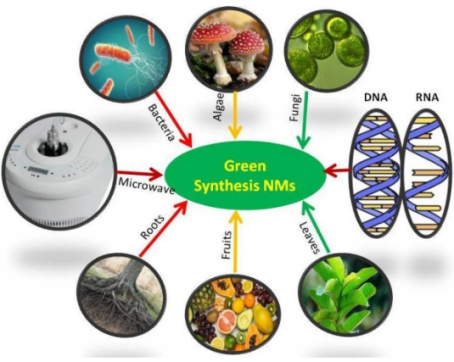
Green synthesis of nanoparticles utilizes biological agents such as bacteria, fungi, and plant extracts is an environmentally friendly method that requires low energy activation for reactions
. Bacteria are effective in reducing metal ions, while fungi have intracellular enzymes and proteins that aid in Nano-particle synthesis
| [34] | A. Kumar, A. Sanger, A. Kumar, and R. Chandra, “RSC Advances Fast response ammonia sensors based on TiO2 and NiO nanostructured bilayer thin fi lms †,” pp. 77636–77643, 2016, https://doi.org/10.1039/C6RA14342C |
[34]
. Plant extracts, rich in biomolecules, are also used for Nano-particle preparation. Although biological synthesis has limitations in controlling size and yield, and can be slow, it remains a promising method for Nano-particle production
.
Solvent System-Based Green Synthesis
Solvent systems play a crucial role in the synthesis process, whether it is a "green" procedure or not. While water is the most preferred solvent, there are limitations to its use in certain cases. New trends in ionic and supercritical liquids have emerged to address issues related to toxic and non-toxic solvents in Nano-particle production and renewable sources. Ionic liquids have the advantage of readily dissolving numerous materials, offering a wide temperature range during operation, and being non-coordinating against polarity. They also have no vapor pressure, making evaporation into the environment a non-issue. Supercritical fluids, on the other hand, are created by subjecting ordinary solvents to extreme temperatures and pressures, altering their properties significantly to overcome the limitations of conventional liquids.
2.1.5. Self-Assembly
Self- Assembly techniques mimic natural self-assembly processes, such as block copolymer self-assembly, to create periodic nanostructures through phase separation. This method results in ordered structures with various shapes
. Another approach involves evaporating nanoparticles onto a liquid-air interface, leading to the formation of Nano-particle islands and subsequent monolayer growth. Liquid crystals can also be used for self-organization to create three-dimensional synthetic materials with strong resonances in the visible spectrum
.
2.1.6. Gas-Phase Deposition Techniques
Gas-phase deposition includes two main methods: Physical Vapor Deposition (PVD) and Chemical Vapor Deposition (CVD)
| [39] | V. E. Ferry et al., “Light trapping in ultrathin plasmonic solar cells,” vol. 18, no. June, pp. 237–245, 2010. |
[39]
. Physical Vapor Deposition (PVD), known for its eco-friendly approach, involves vaporizing the material and condensing it onto a surface, suitable for coating flat or simple shapes. On the other hand, Chemical Vapor Deposition (CVD) introduces gas substrates into a chamber to form coatings through chemical reactions, allowing for coating three-dimensional parts
| [40] | P. R. West, S. Ishii, G. V Naik, N. K. Emani, and V. M. Shalaev, “Searching for better plasmonic materials,” vol. 808, no. 6, pp. 795–808, 2010, https://doi.org/10.1002/lpor.200900055 |
[40]
. Plasmonic materials like silver and gold are commonly used, with silver offering low losses for visible and near-infrared light, while gold provides higher chemical stability. Alternative plasmonic materials include nitrides, doped transparent conducting oxides, graphene, and metals like copper, aluminum, chromium, or iridium
| [41] | L. Armelao, D. Barreca, M. Bertapelle, G. Bottaro, and C. Sada, “A sol – gel approach to nanophasic copper oxide thin films,” vol. 442, no. 03, pp. 48–52, 2003,
https://doi.org/10.1016/S0040-6090(03)00940-4 |
[41]
.
2.1.7. Sol-Gel Process
The Synthesis, Properties, and Applications of Oxide Nano-materials discuss the sol-gel process used to prepare metal oxides by hydrolyzing metal reactive precursors in an alcoholic solution. This results in the formation of a metal hydroxide polymer that condenses into a densely packed porous gel. Heating and drying the gel produces a metal oxide powder crystal of the desired particle size. The resulting metal oxide can be in the form of nanoparticles, bulk material, or oxygen-deficient based on the heat treatment. For example, copper oxide nanoparticles were produced using copper (II) acetate in ethanol as a precursor in this method
| [42] | Y. Niu, Q. Shi, T. Peng, X. Cao, and Y. Lv, “Research Progress on the Synthesis of Nanostructured Photocatalysts and Their Environmental Applications,” Nanomaterials, vol. 15, no. 9, 2025, https://doi.org/10.3390/nano15090681 |
[42]
.
2.2. Photo-catalysis Operating Parameters
Various external factors, known as operating or extrinsic parameters, can influence the rate of a photo-catalytic reaction
| [41] | L. Armelao, D. Barreca, M. Bertapelle, G. Bottaro, and C. Sada, “A sol – gel approach to nanophasic copper oxide thin films,” vol. 442, no. 03, pp. 48–52, 2003,
https://doi.org/10.1016/S0040-6090(03)00940-4 |
[41]
. These factors include the catalyst concentration, temperature, pH of the solution, initial concentration of the organic compound and oxygen content.
2.2.1. Concentration of the Catalyst
Research has indicated that the concentration of the catalyst is directly related to the number of electron-hole pairs produced. Increasing the catalyst amount enhances the active sites on the photo catalyst surface, leading to a higher rate of the photoreaction. However, the reaction rate peaks at a certain concentration level, known as the limit concentration, where total absorption occurs. Beyond this limit, the photoreaction rate may decline
| [40] | P. R. West, S. Ishii, G. V Naik, N. K. Emani, and V. M. Shalaev, “Searching for better plasmonic materials,” vol. 808, no. 6, pp. 795–808, 2010, https://doi.org/10.1002/lpor.200900055 |
[40]
.
2.2.2. Temperature
Prior research has demonstrated that photo-catalytic systems can operate without the need for additional heat as they are triggered by photons. Photo reactions are generally unaffected by minor temperature changes. Lower temperatures enhance adsorption, a naturally exothermic process. However, temperatures exceeding 80°C can impede the exothermic adsorption of pollutants. Experiments utilizing high-power lamps for photo-catalysis are typically outfitted with cooling mechanisms to sustain a system temperature of 25°C
| [39] | V. E. Ferry et al., “Light trapping in ultrathin plasmonic solar cells,” vol. 18, no. June, pp. 237–245, 2010. |
[39]
.
2.2.3. PH Value
Researchers have found that the pH level impacts the charged surfaces of semiconductors and pollutants, affecting particle size in water and pollutant adsorption on semiconductor surfaces. Studies show that lower pH levels lead to higher degradation rates of pollutants during photo catalytic processes
| [39] | V. E. Ferry et al., “Light trapping in ultrathin plasmonic solar cells,” vol. 18, no. June, pp. 237–245, 2010. |
[39]
.
2.2.4. Initial Concentration of Pollutant
Several studies have found that the photo catalytic activity of catalysts decreases when the initial concentration of pollutants is high, while the photo degradation of pollutants increases at lower concentrations
| [39] | V. E. Ferry et al., “Light trapping in ultrathin plasmonic solar cells,” vol. 18, no. June, pp. 237–245, 2010. |
[39]
.
2.2.5. Oxygen Content in the Medium
Huang conducted a study on the impact of adding H
2O
2 to the process of decolorizing methyl orange. They found that the rate of decolorization increased as the concentration of H
2O
2 increased, with an optimal concentration of 1.2 mmol L for the photo catalytic decolorization of methyl orange solution using Pt.-modified TiO
2 | [39] | V. E. Ferry et al., “Light trapping in ultrathin plasmonic solar cells,” vol. 18, no. June, pp. 237–245, 2010. |
[39]
. In photocatalytic nano-materials synthesis, the oxygen content in the reaction medium was observed as very detrimental factor to decide the best reaction condition.
2.3. Mechanisms of Photo Catalysis
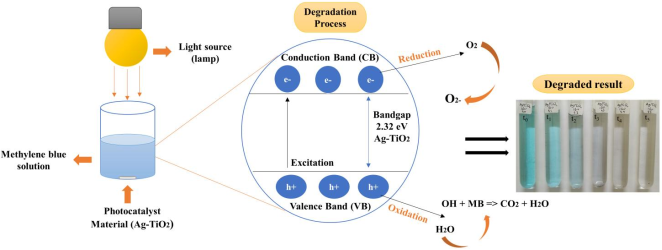
The band gap is the energy difference between the valence band and conduction band of a semiconductor. Photo catalyst semiconductors like TiO
2, ZnO, ZrO
2, and CdSe absorb ultraviolet energy from sunlight or artificial light sources to create electron-hole pairs only if the energy exceeds the band gap. When illuminated, the conduction band electron of the photo catalyst becomes excited, entering a photo-excitation state. The electron is negative and the hole is positively charged. The positively charged hole in the valence band splits water molecules into hydrogen gas and high-energy hydroxyl free radicals. The electron reacts with oxygen to produce superoxide anions. This cycle continues as long as light energy is present. The process of photo catalysis involves chemical reactions explained through equations i-ix below
| [39] | V. E. Ferry et al., “Light trapping in ultrathin plasmonic solar cells,” vol. 18, no. June, pp. 237–245, 2010. |
[39]
. When semiconductor photo catalysts are exposed to light, valence band electrons move to the conduction band, creating positively charged holes. For enhanced efficiency, it is crucial that these electrons and holes spend more time before recombining. The resulting reactive species like OH• radicals help reduce recombination rates and interact with organic pollutants. The energy requirements for wastewater treatment suggest that the CB of the photo catalyst must be more negative than the reduction potential of H+/H
2, while the VB must be more positive than the oxidation potential of H
2O/O
2. Visible light, with energy greater than 1.23 eV, can drive photo catalysis for wastewater treatment.
Figure 4. The Degradation of pollutant by heterogeneous photo catalysis.
Here, the redox potentials (E0) of some active radicals, such as H+ /H2, O2 / O2- and H2O/OH should be noted as 0V, -0.33 V and -0.42 V, respectively.
The photo-catalytic oxidation of organic compounds under UV light can be presented as follows:
Semiconductor photo-catalyst + hv→e-CB+ h+VB(6)
Organic pollutant + OH*→degradation product (12)
Organic pollutant + semiconductor photo-catalyst (h+VB)→oxidation products(13)
Organic pollutant + semiconductor photo-catalyst (e-CB)→reduction products(14)
When an excited electron-hole pair recombines, it releases excess energy in the form of heat, which is not ideal for efficient photo catalysis. The main goal of photo catalysis is to facilitate a catalytic reaction between the excited electrons and oxidants to produce a reduced product. Additionally, a reaction between the generated electrons and a reductant is necessary to yield an oxidized product. These reduction and oxidation reactions take place on the surface of photo catalysts, creating positive holes and electrons. In the oxidative reaction, positive holes interact with moisture on the catalyst surface to produce hydroxyl free radicals. Introducing more oxygen from outside the photo-catalytic reactor can act as electron acceptors and enhance pollutant degradation by slowing down recombination. The time required for complete pollutant degradation increases as the amount of photo-catalyst decreases.
2.3.1. Heterogeneous Photo Catalysis
Heterogeneous photo catalysis is a well-established field within chemical catalysis known for its applications in wastewater treatment and air purification. Unlike homogeneous catalysis, the catalyst in this process is in a different phase from the reactants
. Various reactions can be achieved through heterogeneous photo catalysis, including dehydrogenation, oxidations, hydrogen transfer, water detoxification, metal deposition, isotopic exchange, and pollutant removal. Transition metal oxides and semiconductors are commonly used as heterogeneous photo catalysts due to their exceptional properties.
2.3.2. Homogeneous Photo Catalysis
In a homogeneous photo catalytic reaction, both the reactants and photo catalysts are in the same phase
| [44] | P. Taylor, J. J. Pignatello, E. Oliveros, and A. Mackay, “Critical Reviews in Environmental Science and Technology Advanced Oxidation Processes for Organic Contaminant Destruction Based on the Fenton Reaction and Related Chemistry Advanced Oxidation Processes for Organic Contaminant Destruction Based on the Fent,” no. August 2012, pp. 37–41,
https://doi.org/10.1080/10643380500326564 |
[44]
. The homogeneous photo catalysts include ozonolysis and photo-Fenton systems. Fenton discovered that combining hydrogen peroxide and Fe(II) in an acidic environment creates strong oxidizing properties. The mechanism of this Fenton reaction, known for producing hydroxyl radicals, is still debated. It involves a redox reaction where Fe(II) is oxidized to Fe(III) by H
2O
2, leading to the formation of hydroxide ions and hydroxyl radicals.
The hydroxyl radical production mechanism of by ozone can occur in the following paths.
In the same way, the Fenton system yields hydroxyl radicals by the following:
Fe+2+ H2O2→*OH + Fe3++ OH-(19)
Fe3++H2O2→Fe+2+*OOH+H+(20)
In a photo Fenton kind reaction process additional source of *OH generated over photo catalysis of hydrogen peroxide and reduction of Fe3+ ions in the presence of light energy.
Fe3++ H2O2+ hv→Fe+2+ H++ *OH (23)
The effectiveness of photon-Fenton processes depends on factors like pH, H
2O
2 concentration, and UV light intensity. One advantage is that it can utilize solar energy up to 470 nm without needing expensive UV or electrical sources. Photon-Fenton reactions are considered more efficient than other photo catalytic reactions. However, a drawback is the need for low pH levels due to iron precipitation at higher PH
| [45] | S. Katre, P. Baghmare, and A. S. Giri, “Photocatalytic nanomaterials and their implications towards biomass conversion for renewable chemical and fuel production,” Nanoscale Adv., vol. 6, no. 21, pp. 5258–5284, 2024,
https://doi.org/10.1039/d4na00447g |
[45]
.
2.4. Applications of Photo Catalytic Nano-materials
Photocatalytic nanomaterials have emerged as versatile materials for addressing environmental, energy, and industrial challenges due to their ability to utilize solar energy for chemical transformations. Their ability to harness solar energy for pollutant degradation and chemical conversion makes them key materials for future green technologies. Also their unique physicochemical properties, including high surface area, tunable band gaps, and enhanced charge separation, enable efficient degradation of pollutants and conversion of solar energy into valuable products
| [46] | A. Al Miad, S. P. Saikat, M. K. Alam, M. Sahadat Hossain, N. M. Bahadur, and S. Ahmed, “Metal oxide-based photocatalysts for the efficient degradation of organic pollutants for a sustainable environment: a review,” Nanoscale Adv., vol. 6, no. 19, pp. 4781–4803, 2024,
https://doi.org/10.1039/d4na00517a |
[46]
. Metal oxide nanostructures have distinct physical and chemical properties that make them valuable for various applications. These include removing heavy metals, detecting poisonous gases, coating textiles for wearable electronics, biomedical uses, and degrading organic contaminants through photo catalysis.
2.4.1. Photo Catalytic Removal of Organic Pollutants
Photocatalytic degradation is a highly efficient technique for eliminating organic pollutants such as antibiotics, organic dyes, toluene, nitrobenzene, cyclohexane, and refinery oil from the environment
| [47] | R. K. Advanced photocatalytic degradation of POPs and other contaminants: a comprehensive review on nanocomposites and heterojunctionsPaul and M. Ahmaruzzaman, “Advanced photocatalytic degradation of POPs and other contaminants: a comprehensive review on nanocomposites and heterojunctions,” RSC Adv., vol. 15, no. 38, pp. 31313–31359, 2025,
https://doi.org/10.1039/d5ra04336k |
[47]
. Transition metal oxides and their composites have shown great potential in photo catalytic activities for breaking down organic contaminants
| [48] | T. Ahasan, E. M. N. T. Edirisooriya, P. S. Senanayake, P. Xu, and H. Wang, “Advanced TiO2-Based Photocatalytic Systems for Water Splitting: Comprehensive Review from Fundamentals to Manufacturing,” Molecules, vol. 30, no. 5, pp. 1–46, 2025, https://doi.org/10.3390/molecules30051127 |
[48]
. They have controlled structures and surfaces, acting as semiconductors with wide band gaps and are non-toxic and stable in water, making them effective for degrading organic pollutants through photo catalysis.
Figure 5. Environmental application of Photo-catalytic Nano-materials.
2.4.2. Energy Conversion and Storage
Researchers are working on finding renewable energy sources and reducing the carbon footprint to address the world's energy and environmental crisis. Various energy storage systems, including transition metal oxides, have been developed to tackle these issues. Semiconductor metal oxides like TiO
2, ZnO, WO
3, BiVO
4, and Fe
2O
3 are effective in photo electrochemical water splitting for producing clean hydrogen fuel using solar energy
| [49] | W. Gao et al., “Recent advances of metal active sites in photocatalytic CO2 reduction,” Chem. Sci., vol. 15, no. 35, pp. 14081–14103, 2024, https://doi.org/10.1039/d4sc01978d |
[49]
. Metal oxide Nano-particle photo electrodes show better performance due to their large surface areas and shorter diffusion distances. Metal oxides are also used in solar cells, fuel cells, and energy storage devices like lithium-ion batteries and super capacitors
| [50] | Z. Zhai, Y. Liu, C. Li, D. Wang, and H. Wu, “Electronic Noses: From Gas-Sensitive Components and Practical Applications to Data Processing,” Sensors, vol. 24, no. 15, 2024,
https://doi.org/10.3390/s24154806 |
[50]
. Their morphology can be engineered to achieve high power density for fast charging, making them valuable for electrochemical energy conversion, storage, and catalysis applications.
2.3.3. Poisonous Gas Sensing (Sensor for E-Nose Technology)
Metal oxide semiconductors like SnO
2, In
2O
3, Fe
2O
3, WO
3, and Cr
2O
3 have been used for gas sensing, particularly for monitoring toxic gases like ammonia due to its potential health hazards
| [51] | B. Zong, S. Wu, Y. Yang, Q. Li, T. Tao, and S. Mao, Smart Gas Sensors: Recent Developments and Future Prospective, vol. 17, no. 1. Springer Nature Singapore, 2025.
https://doi.org/10.1007/s40820-024-01543-w |
[51]
. Various regulations limit the concentration of ammonia in different settings. NiO-based sensors have shown promise in detecting ammonia, with recent advancements in using a TiO
2/NiO bilayer sensor for improved performance at lower temperatures. Additionally, metal oxide-based gas sensors are utilized in e-nose technology for on-site monitoring of odours, with Figaro type sensors proving to be the most suitable for long-term applications
| [52] | S. Al Jitan, G. Palmisano, and C. Garlisi, “Synthesis and surface modification of TiO2-based photocatalysts for the conversion of CO2,” Catalysts, vol. 10, no. 2, 2020,
https://doi.org/10.3390/catal10020227 |
[52]
. The use of univariate multiplicative factors has been effective in addressing sensor drift in real-time odour measurements.
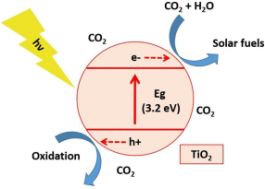
2.3.4. Photo-catalytic Reduction of CO2
Nowadays the rise in fossil fuel consumption has led to increased CO
2 levels in the atmosphere, causing environmental pollution and an energy crisis. To combat this, researchers are focusing on photo-catalytic reduction of CO
2 into energy fuels like methane and methanol
| [50] | Z. Zhai, Y. Liu, C. Li, D. Wang, and H. Wu, “Electronic Noses: From Gas-Sensitive Components and Practical Applications to Data Processing,” Sensors, vol. 24, no. 15, 2024,
https://doi.org/10.3390/s24154806 |
[50]
. Titanium dioxide is a key photo-catalyst for this process. Recent studies have shown that carbon Nano-fibers-supported TiO
2 Nano-crystals with specific facets exhibit enhanced performance in CO
2 reduction
| [53] | S. Asif, K. A. M. Said, N. A. Khan, I. A. Najar, M. R. Rahman, and K. K. K. Kuok, “A comprehensive review of photocatalytic hydrogen evolution incorporating mechanisms and key parameters accompanying future outlook,” Discov. Appl. Sci., vol. 8, no. 5, pp. 1–45, 2026.
https://doi.org/10.1007/s42452-026-08508-1 |
[53]
. Additionally, modifying TiO
2 with Ag noble metal and activated carbon improves its efficiency in CO
2 photo-reduction, increasing the CO conversion rate significantly.
Figure 6. Schematic illustration of the mechanism for the photo-catalytic reduction CO2 on the TiO2.
2.3.5. Hydrogen Generation
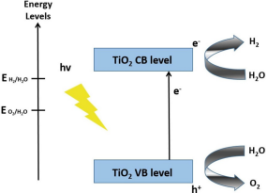
Hydrogen production through photo-catalysis involves decomposing organic species like alcohols and acids, with the main goal being to use water or polluted effluents as a direct source of hydrogen
| [54] | V. Kumar et al., “Unlocking the potential of CdS-based photocatalysts for high-efficiency hydrogen evolution in water splitting,” Discov. Appl. Sci., vol. 8, no. 6, 2026,
https://doi.org/10.1007/s42452-026-08506-3 |
[54]
. There are three mechanisms used for hydrogen production: dehydrogenation of alcohols, water splitting, and alcohol reforming. Various photo-catalysts like TiO
2, SrTiO
3, KTaO
3, and CdS are used for these processes
| [55] | T. Ahasan, E. M. N. T. Edirisooriya, P. S. Senanayake, P. Xu, and H. Wang, “Advanced TiO2-Based Photocatalytic Systems for Water Splitting: Comprehensive Review from Fundamentals to Manufacturing,” Molecules, vol. 30, no. 5, pp. 1–46, 2025, https://doi.org/10.3390/molecules30051127 |
[55]
. The hydrogen produced is not pure and is accompanied by other species like CO
2, alkanes, and aldehydes. Researchers have studied different catalysts like AuAg/TiO
2 for efficient hydrogen production, showing that the metal loading and preparation method are crucial factors.
Figure 7. The photo-catalytic production of hydrogen by TiO2.





 Share This Article
 Twitter
 Linked In
 Facebook
 Copy
Copy Download